A puppy's first groom sets the tone for every groom after it. Done early and gently, it teaches a dog that the tub, the dryer, the clippers, and being handled by a stranger are ordinary parts of life. Rushed into a full adult appointment too young, the same visit can teach the opposite lesson, and that one sticks just as well.
In Lincolnton, shops like Downtown Doggies offer puppy intro grooms for exactly this reason. If you have never taken a puppy to a groomer, here is the timing and the shape of those first visits, step by step.
When a puppy is ready to start
Most groomers want a puppy to have received its early rounds of vaccinations before coming into a salon full of other dogs, and many ask that the puppy be a few weeks past a key round so protection has had time to build. Exact policies vary by shop, so ask when you call. Most puppies start intro visits somewhere around three to four months old.
Do not wait for the coat to force the issue. A doodle, poodle, or other long-coated puppy who first meets a groomer at eight months, already matted, faces a long and uncomfortable first appointment. Starting at three or four months with almost nothing that needs doing is the point: the puppy learns the place while the stakes are low.
What an intro visit includes, and what it skips
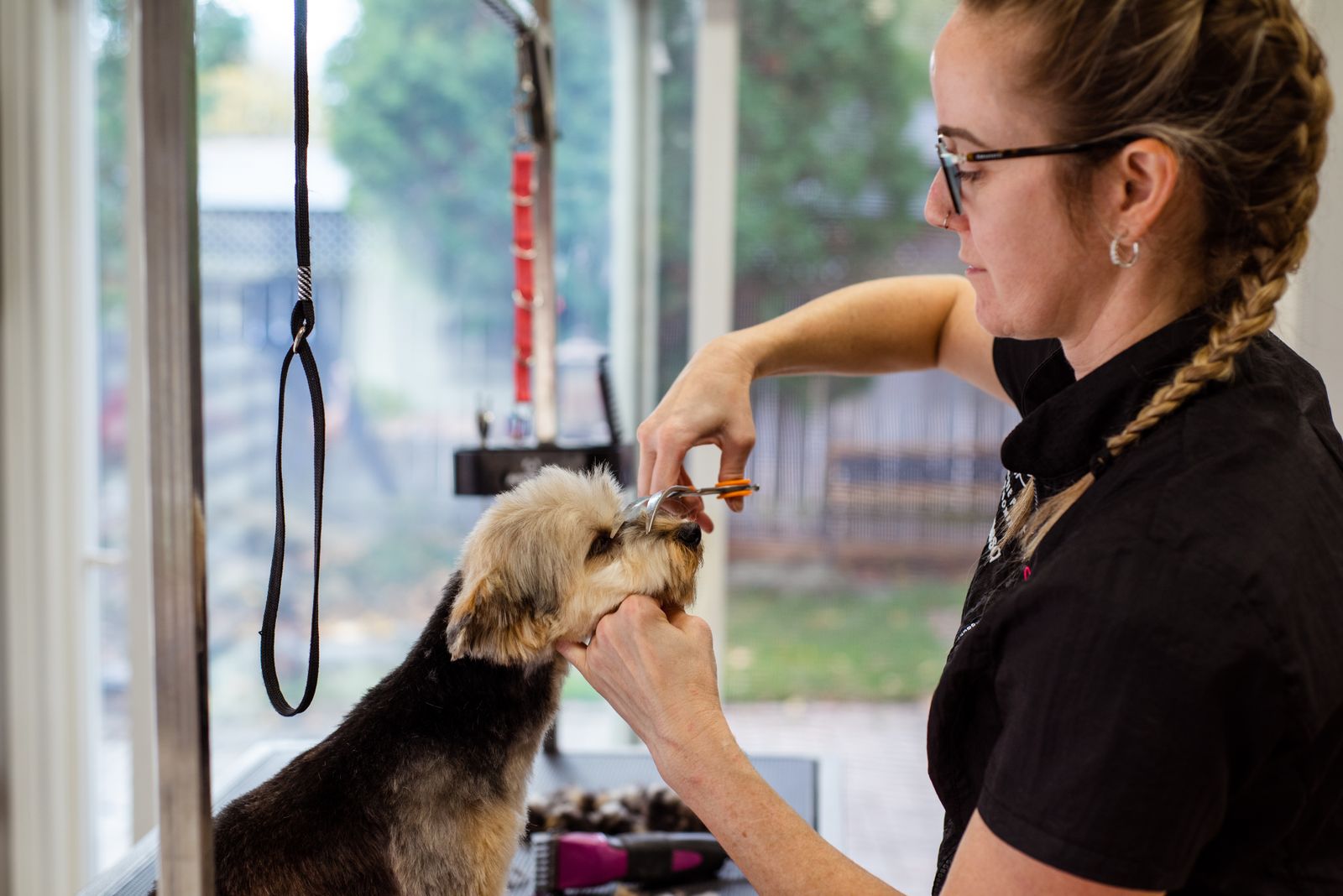
An intro groom is a shortened menu on purpose. Typically it includes a bath, a gentle blow-dry, a brush-out, a light trim around the face, feet, and sanitary areas, and nail care if the puppy tolerates it. What it usually skips is the full body haircut. The goal of the first one or two visits is handling and confidence, not a finished style.
Expect the appointment to be shorter than an adult groom and the report to be about behavior as much as appearance: how the puppy did in the tub, whether the dryer was a problem, and what to practice at home before the next visit.
A first visit, step by step
- Arrival and sniffing around. The puppy meets the groomer, explores the sounds and smells briefly, and is handled gently before anything starts.
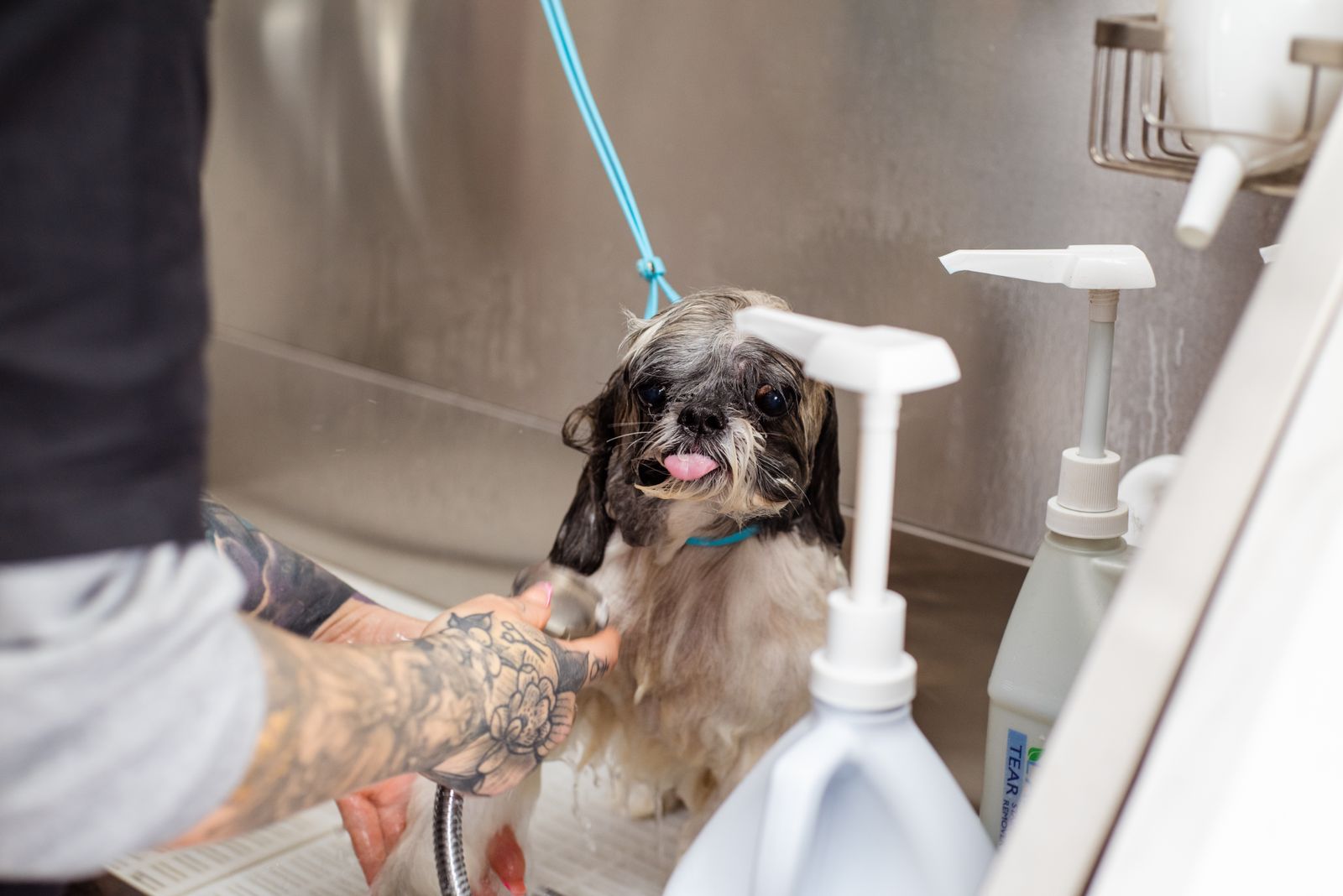
- The bath. Lukewarm water, mild puppy-appropriate shampoo, and a short wash. Most puppies accept the tub well when it is not rushed.
- Drying, introduced gradually. Towel first, then moving air at a low, quiet setting, stopped and restarted so the puppy learns the sound is not a threat.
- Brush-out and comb check. A soft brush and then a gentle comb teach the puppy that grooming handling includes the whole body, including feet and ears.
- Face, feet, and sanitary tidy. Small trims with scissors or quiet clippers introduce the tools near sensitive areas in tiny, low-pressure doses.
- Nails, as tolerated. Often just the sharp tips, or even just touching the clippers or grinder to the nails, so the sensation is familiar next time.
- A good ending. The visit stops while the puppy is still coping well, even if that means one small item waits for next time.
What to practice at home between visits
Five minutes a few times a week beats one long session. Handle the paws and spread the toes. Lift the ears. Hold a vibrating object, like an electric toothbrush, near the puppy so buzzing near the body becomes boring. Brush a little, reward calm, and stop before the puppy gets worked up. If you plan on a coat that needs real brushing as an adult, start the line-brushing habit now while the puppy coat is easy, so the routine is old news when the adult coat arrives.
Tell your Lincolnton groomer honestly what went badly at home. If the puppy panics at nail handling or hates its face touched, that is useful information for planning the next visit, not an embarrassment to hide.
Building from intro to full grooms
Most puppies graduate over two to four visits: a tidy, then a slightly longer appointment, then a first full haircut once handling is routine. Keep the interval short at first, about every four weeks, so the salon stays familiar rather than becoming a strange place the puppy has to relearn each time. By adulthood, a dog started this way usually walks in calmly, and that calm is worth more than any single haircut, because it lasts the dog's whole life of grooming every month or two.
Common questions
How old should my puppy be for a first groom?
Most puppies start around three to four months, after early vaccinations, with a short intro visit. Ask your groomer for their policy, since shops set their own vaccine requirements.
Will the first groom include a full haircut?
Usually not. Intro visits cover a bath, dry, brush, and small tidies, and save the full cut for when the puppy is comfortable being handled and hearing the tools.
What if my puppy is scared the first time?
That is common and fixable. Short visits that end while the puppy is still coping, plus paw and ear handling at home, build confidence faster than one long appointment.
Photos in this guide are representative stock images.
← All guides from Downtown Doggies← Back to Downtown Doggies