Between full grooms in Lincolnton, most dogs need at least one home bath: a muddy week, a roll in something regrettable, or just the point where the dog smell reaches the couch. Home bathing goes wrong in predictable ways, almost always in the rinse and the dry, not the wash itself.
This is a decision guide, not a single recipe. The right setup depends on your dog's size, coat, and tolerance, and on whether you are working in a tub, a shower, or a yard in warm weather. Places like Downtown Doggies handle the full bath and blow-out; at home, your job is a clean, fully rinsed, fully dry dog and a bathroom that survives it.
Choose your setup by dog, not by habit
| Situation | Best setup | Why it works |
|---|---|---|
| Small dog, any coat | Kitchen or utility sink with a sprayer | Saves your back, keeps the dog contained, and makes rinsing the belly easy |
| Medium to large dog | Tub or shower with a handheld sprayer | Room to turn, and a sprayer that reaches the chest, belly, and rear |
| Double-coated dog | Tub, plus a drain strainer | Loose undercoat will fill the water; a strainer keeps it out of the plumbing |
| Warm summer day, short coat | Yard with a hose, after the water warms in the sun | Easy cleanup, but hose water starts cold and a wet dog will roll in grass |
| Dog who hates baths | Wherever the dog is calmest, with a non-slip mat | A familiar, stable surface matters more than the perfect location |
Shampoo: less, diluted, and meant for dogs
Dog skin is less acidic than human skin, so human shampoo, even gentle kinds, can leave a dog dry and itchy. Use a dog shampoo. Then use less of it than you think. Many groomers dilute shampoo in a squeeze bottle of water, which spreads it evenly through the coat instead of leaving one thick stripe down the back and bare sides.
Work from the neck down, keep shampoo and water out of the ears and eyes, and wash the feet and rear last and most carefully, since that is where the dirt actually lives. For a de-shedding wash at home, brush the dog before the bath, not after: loose coat comes out dry in a fraction of the time, and what is left rinses cleaner.
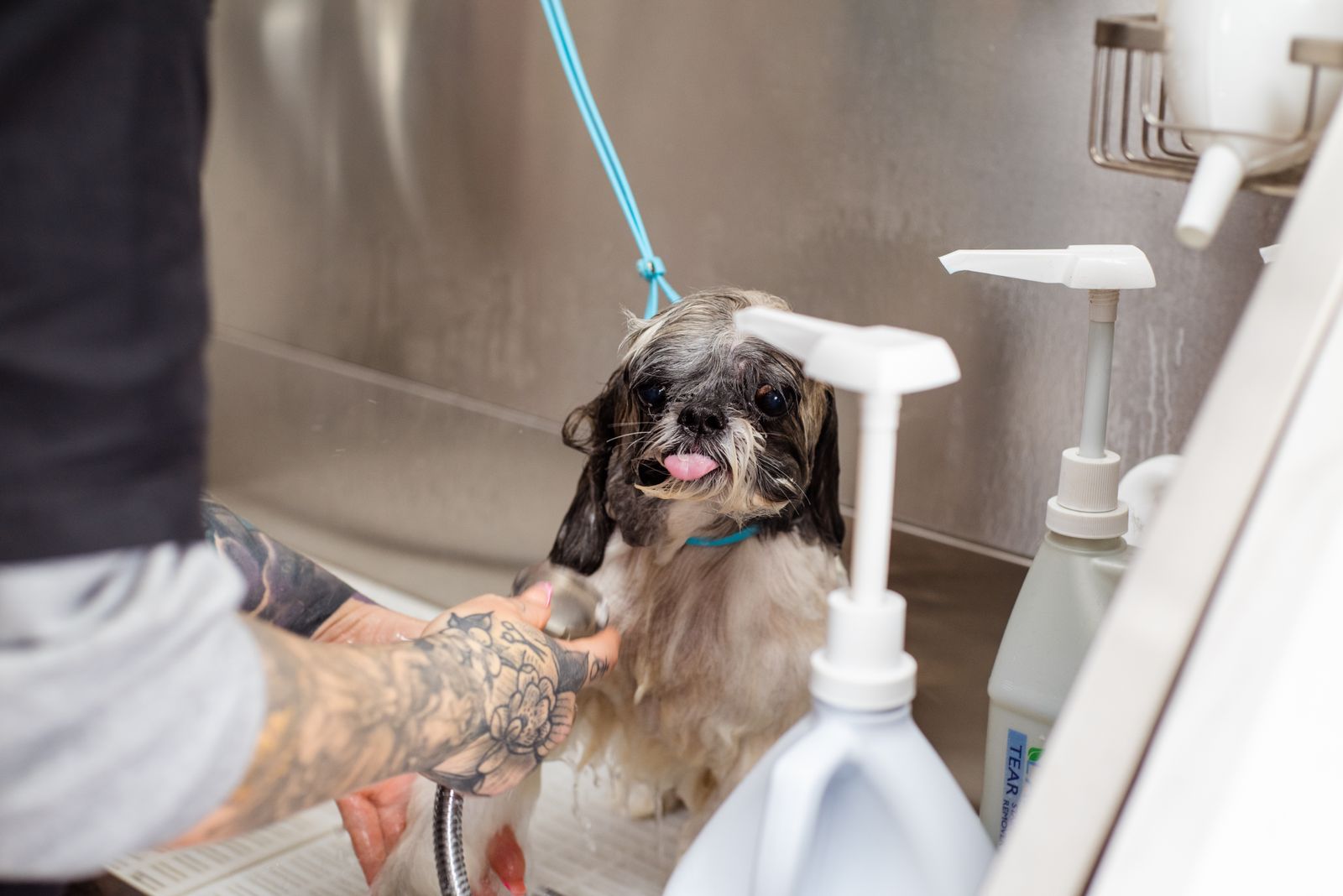
Rinsing is the step everyone cuts short
Most post-bath itching at home is leftover shampoo, not the bath itself. Residue sits against the skin, dries, and flakes, and owners then blame the product or bathe again, which makes it worse. Rinse until the water runs completely clear, then rinse one more minute. Pay attention to the armpits, the belly, behind the ears, and anywhere the coat is thickest, because those are the places shampoo hides.
Use lukewarm water throughout. Hot water dries skin and makes most dogs restless; cold water makes a dog fight the process and can leave shampoo behind because everyone rushes.
Drying to the skin, not just to the touch
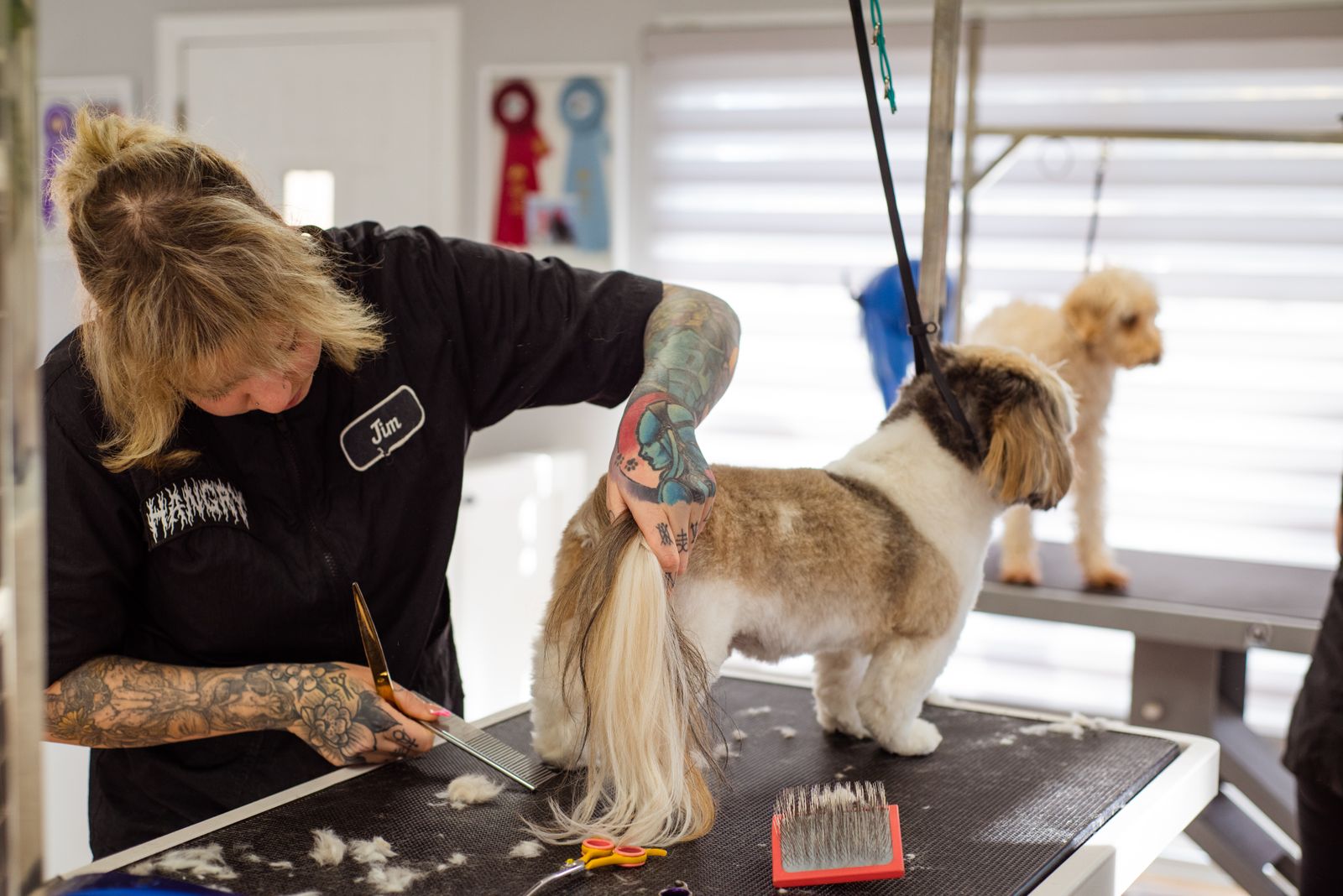
A coat can feel dry on top while the skin underneath stays damp for hours, especially on curly, double, and long coats. Damp skin under a dense coat is where hot spots and that sour, musty odor start. Towel first, then dry with moving air: a pet dryer if you have one, or a hair dryer on a cool or low setting kept moving and never held in one spot. Brush while you dry on longer coats so air reaches the skin and tangles do not set as they dry.
Containing the mess
Lay towels on the floor before the dog goes in, not after. Close the door. Brush and, if you trim at home, do messy work before the bath so loose hair washes away instead of landing on a clean dog. Expect the shake: every dog waits until it is fully soaked, then shakes. If you hold a towel up like a curtain at that moment, most of the water lands on the towel instead of the walls.
Know where home bathing stops. Mats that are already tight to the skin, skin that is red or broken, ears that smell strong or produce dark discharge, and any lump you find while washing are groomer or veterinarian territory, not reasons to scrub harder. A home bath keeps a dog clean between appointments in Lincolnton; it does not replace the haircut, nail care, and ear check in a full groom.
Common questions
How often can I bathe my dog at home?
For most dogs, every few weeks is fine, and more often is usually about odor or dirt than need. Bathing too frequently with harsh products can dry the skin, so watch for flaking or itching.
Can I use my own shampoo in a pinch?
It is better to wait or use plain water for a rinse-off. Human shampoo is formulated for more acidic human skin and commonly leaves dogs itchy, especially with repeated use.
Why does my dog still smell after a bath?
Usually the coat dried on top while the skin stayed damp, or shampoo residue was left behind. Dry to the skin with moving air and rinse longer next time before reaching for a stronger product.
Photos in this guide are representative stock images.
← All guides from Downtown Doggies← Back to Downtown Doggies