A double-coated dog in Lincolnton sheds in a way that can fill a vacuum canister in a single pass. Owners often ask for the dog to be shaved so the hair stops, and groomers decline, for good reasons. The service that actually addresses the problem is a de-shedding treatment, and understanding what it does starts with understanding what a double coat is.
At shops like Downtown Doggies, de-shedding is part science and part patience. This guide covers the undercoat itself, what the treatment removes, what waiting too long between treatments does to skin and coat, and why the clippers stay in the drawer.
Two coats doing two jobs
The outer coat, the guard hairs, is the visible one: it sheds water, carries the color and pattern, and protects against sun and brush. Under it sits the undercoat, a dense, soft layer that insulates. In winter it traps warmth; as seasons change, dogs blow that layer out and grow a lighter or heavier one in its place.
Shedding is not the coat failing. It is the coat renewing itself on a seasonal cycle, sped up indoors by artificial light and steady temperatures, which is why house dogs shed noticeably all year with heavy peaks in spring and fall. The hair on your floor is mostly undercoat that has released and worked its way out, or, in a neglected coat, hair that released and never got out at all.
What a de-shedding treatment actually does
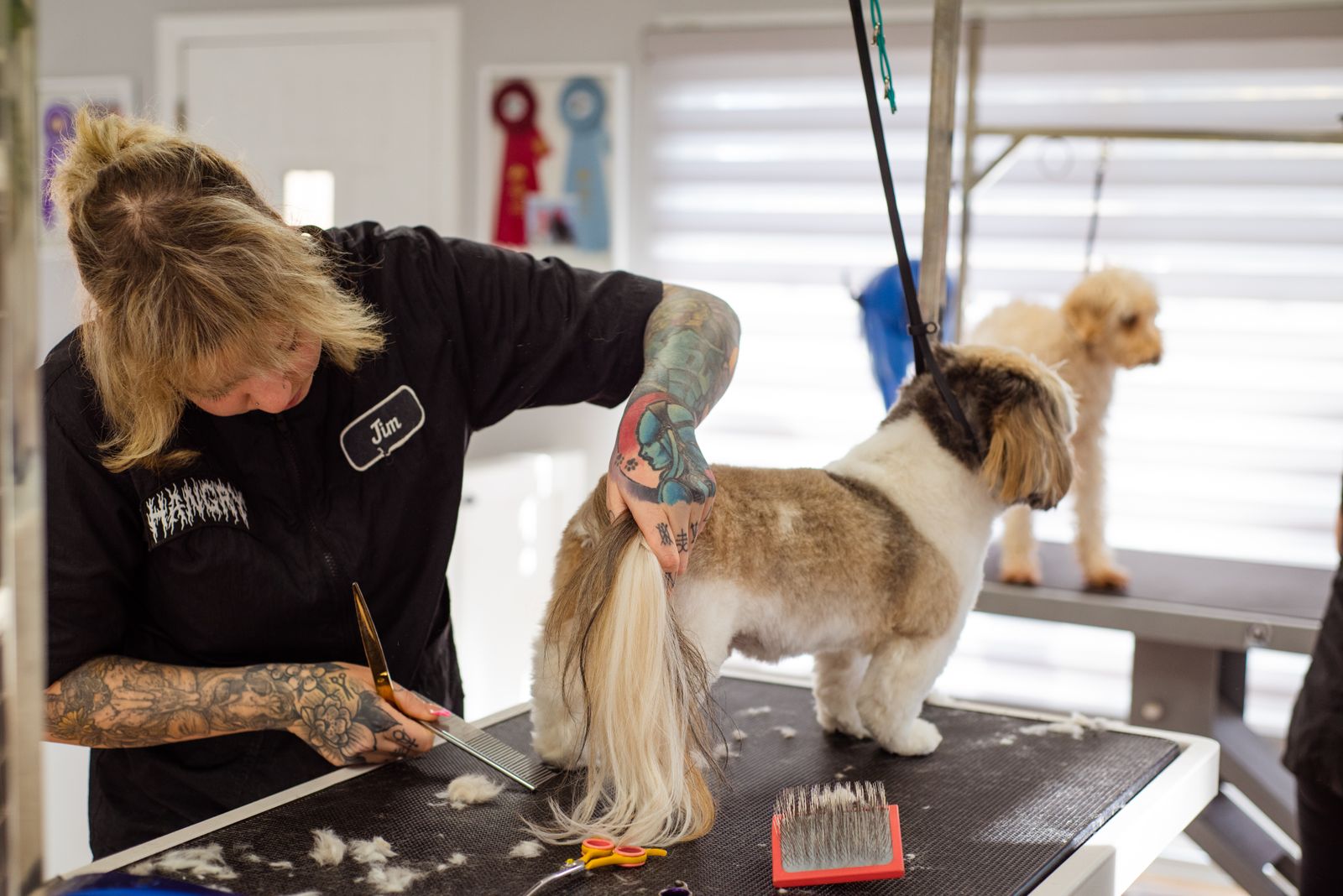
The treatment works in stages. A bath with products meant to loosen undercoat softens and releases hair that is ready to come out. A high-velocity dryer, which blows air with force rather than heat, lifts and separates the coat and pushes loose undercoat out in quantities that surprise first-time owners. Then brushing and raking with tools matched to the coat remove what remains, working section by section down to the skin.
What it does not do is stop the cycle. A de-shed removes the hair that was ready to leave over the next several weeks and brings it out in one afternoon, in the salon, instead of on your floors across a month. Shedding continues at a lower, more manageable level afterward. Any service promising to end shedding entirely is promising something a living coat cannot do.
What waiting does: the cost of a packed coat
Undercoat that is never removed packs down. Packed undercoat traps moisture and heat against the skin during humid Piedmont summers, blocks airflow, and hides the skin from view. Under that felted layer, hot spots can start and spread unseen, and mats form in the armpits, behind the ears, and along the belly where the coat is longest.
The longer it goes, the harder the fix. A moderately overdue dog needs a longer, more expensive-in-effort session of bathing, blowing, and brushing, and a dog whose undercoat has felted tight may have to be clipped in the worst areas, the very outcome regular treatment avoids. Skin that has stayed damp and irritated under packed coat may also need a veterinarian's look before grooming continues. Small, regular maintenance is the cheap version of this story in every sense except money, which this guide is not quoting anyway: it is less time on the table, less stress for the dog, and no surprises under the coat.
Why you never shave a double coat
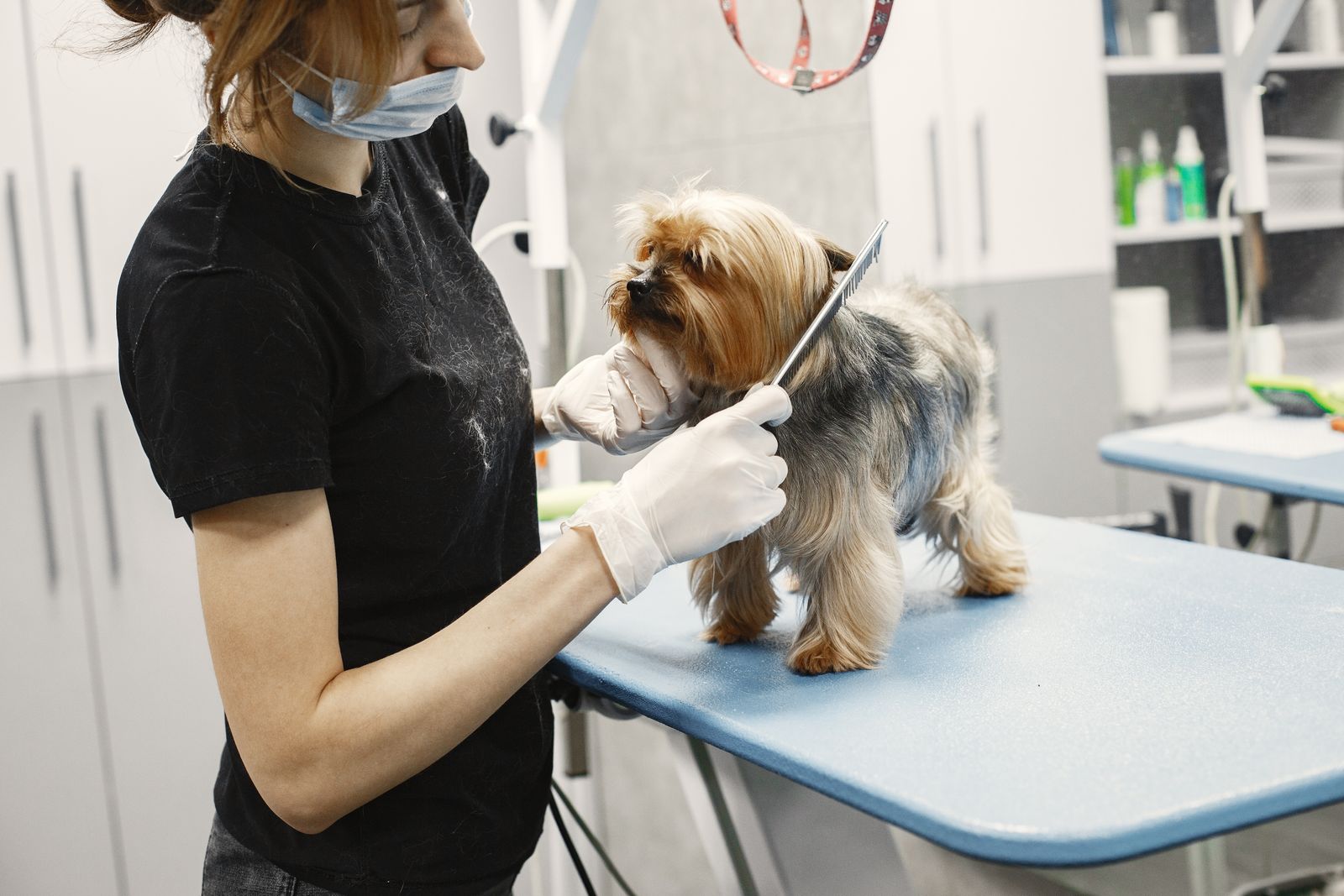
Shaving removes both layers to the same short length, which strips the dog of insulation in both directions: the undercoat that keeps a dog warm in winter also shields skin from sun and helps regulate heat in summer, and the guard coat protects against sunburn. Shaved double coats can also grow back unevenly, with the undercoat returning faster than the guard hairs, leaving a fuzzy, patchy texture that mats more easily than the original coat. In some dogs the guard coat never fully recovers its old quality.
There are narrow exceptions, such as a veterinarian directing a clip for a skin condition or a coat so matted that nothing else is humane. Outside those cases, the answer to shedding is removal of the loose layer on schedule: weekly brushing at home during heavy shed, and a full de-shedding groom every six to eight weeks in season at Downtown Doggies or your own Lincolnton groomer.
Common questions
Will a de-shedding treatment stop hair in my house?
It reduces it a lot for several weeks by removing loose undercoat all at once, but a double coat keeps its normal cycle. Expect much less hair, not none.
How often should a double-coated dog get one?
Every six to eight weeks during spring and fall sheds works for most dogs, with a longer interval in quieter months. Weekly home brushing stretches the benefit.
Is shaving ever the right call for a double coat?
Only for medical reasons or a coat too matted to save. For ordinary shedding, shaving trades a manageable problem for sun exposure and a coat that may regrow patchy and more mat-prone.
Photos in this guide are representative stock images.
← All guides from Downtown Doggies← Back to Downtown Doggies