Doodle coats surprise people. The puppy coat is soft, wavy, and forgiving, and then somewhere in the first year it changes. The adult poodle-mix coat is denser, curlier underneath, and prone to a particular trick: looking fluffy on top while felting into a solid mat at the skin. In Lincolnton, the seasons make that trick faster.
This is the seasonal version of the doodle conversation groomers have every week at shops like Downtown Doggies: what the coat is doing in each part of the Piedmont year, what brushing actually has to accomplish, and why a shave-down is sometimes the kind option rather than the lazy one.
Spring and summer: humidity, water, and pollen
Spring brings pollen season, rain, and mud, and then summer brings real humidity and dogs who get wet often. Water is the doodle coat's accelerant. A coat that gets wet and air-dries without being brushed and combed out will tighten its curls as it dries and lock loose hair into mats. Every swim, bath, sprinkler run, and rainy walk needs a brush-out once the coat is dry.
Summer also tempts owners to ask for the coat left long for appearance while the dog is hot, itchy from pollen rinsed into the coat, and matting at the collar, harness, armpits, and behind the ears. A shorter summer length is easier to rinse, faster to dry to the skin, and far easier to keep mat-free through the wettest months.
Fall and winter: the quiet matting season
Fall looks safer and is not. Coats grow out after summer cuts, sweaters and jackets add friction, and holiday weeks push grooming appointments later. Winter in the Piedmont is mild, but damp: wet grass, mud, and the occasional cold rain keep coats getting wet and drying slowly indoors.
The adult coat change also lands for many doodles during these months if the puppy was born in spring. The coat transition, when the soft puppy coat is being pushed out by adult hair, is the highest-matting period of a doodle's life, and daily line brushing is not an exaggeration during it.
Line brushing: the technique that actually works
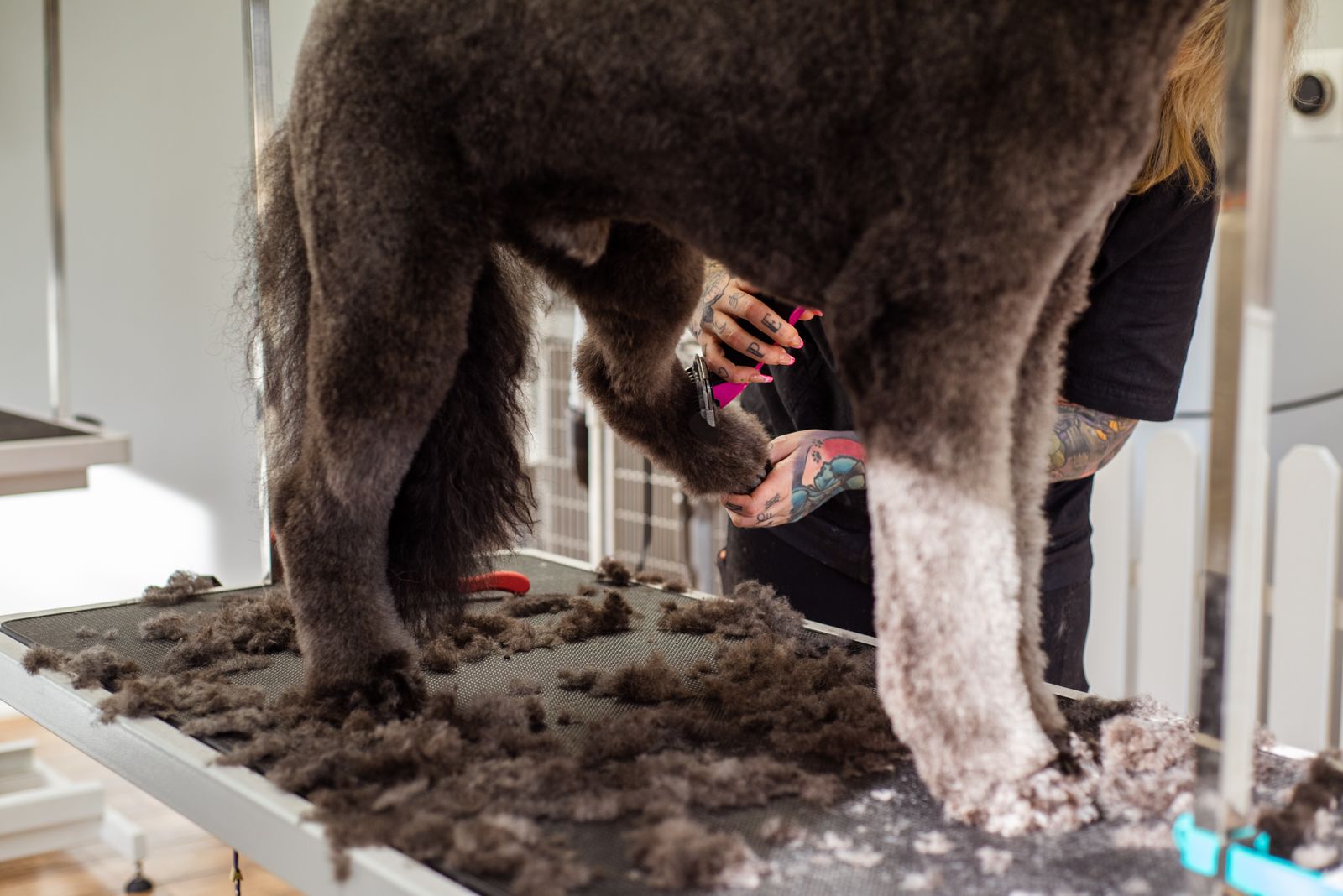
Most home brushing fails because it skims the top. Line brushing works in layers. Lift a section of coat, brush the layer underneath from the skin outward, then let down a little more coat and repeat, working across the whole dog in lines. Follow with a metal comb from skin to tip. Where the comb stops, a mat is forming, and that spot needs the brush again, worked gently from the ends inward.
Hit the friction zones every time: behind the ears, under the collar, the armpits, the belly, the backs of the legs, and where a harness sits. Two or three thorough sessions a week beat a daily pass over the back that never touches the places mats start.
Seasonal doodle coat checklist
- After any swim, bath, or rain soak: dry fully, then brush and comb to the skin the same day.
- Before summer: choose a length you can maintain through humidity, water, and vacation boarding.
- Weekly: run a metal comb through ears, collar area, armpits, belly, and leg backs; fix stops early.
- During the puppy-to-adult coat change: line brush daily until the new coat is fully in.
- Before holidays and trips: book the groom early, since a matted dog cannot be squeezed into a rushed slot humanely.
- At every groom: ask the groomer to show you exactly where your dog matted, so home brushing targets the right spots.
The shave-down conversation, honestly
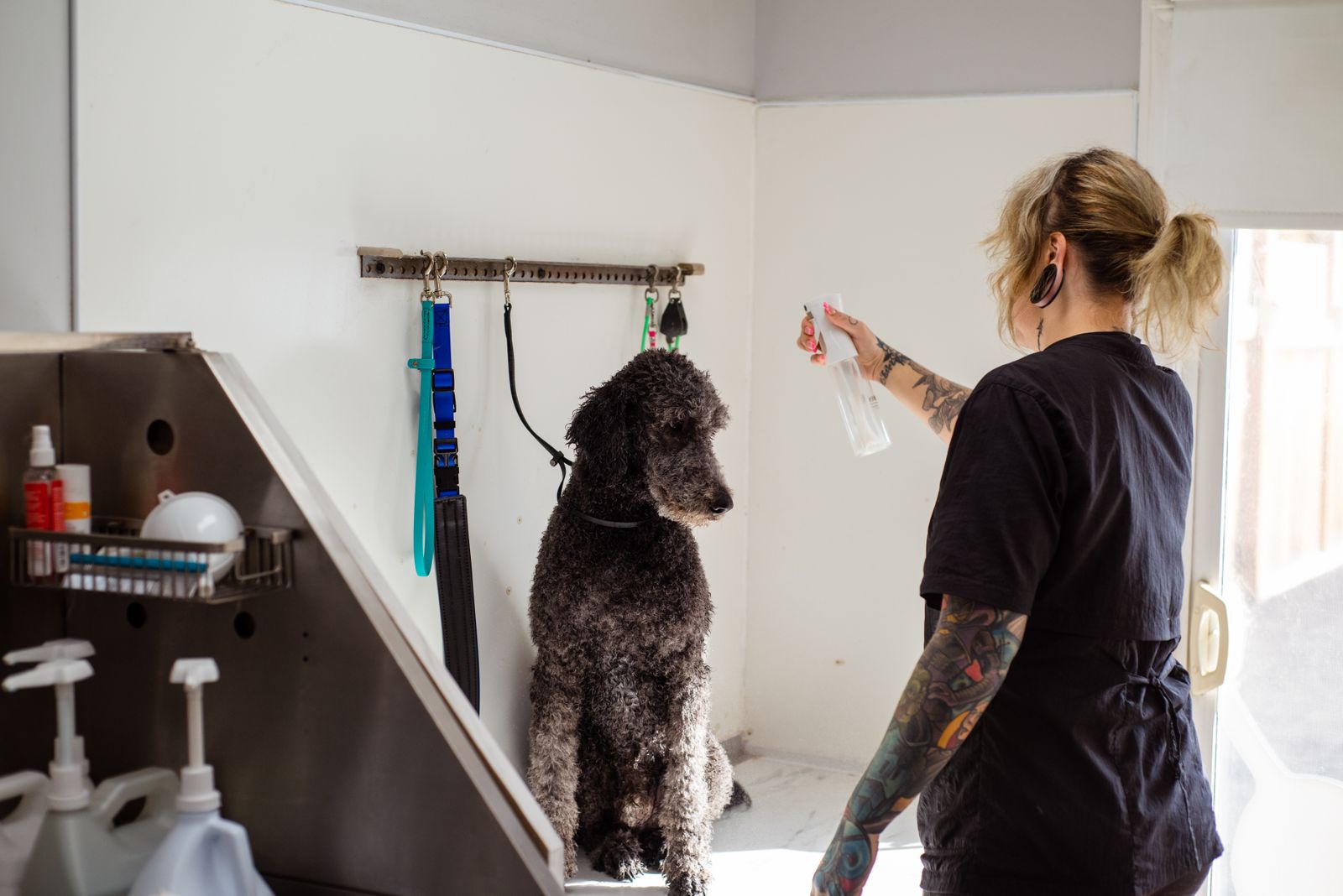
When a coat is matted to the skin across large areas, brushing it out would mean long sessions of pulling on skin that is already irritated underneath, and it can take hours a dog has to stand through. Clippers, by contrast, slide under the mat and remove it in minutes. Groomers recommend a shave-down in that situation because it is faster and kinder, not because it is easier to schedule.
Tight mats also hide things: red skin, hot spots, burrs, and occasionally a tick or a sore that nobody could see. Removing the coat is how those get found and treated. The fresh start grows back, and with a realistic length, a grooming interval of four to six weeks, and line brushing at home, most doodles never need a second shave-down. The owners who end up repeating it are usually the ones who kept the same long length and the same brushing routine that caused the first one.
Common questions
Are doodle coats really non-shedding?
They shed far less loose hair into the house, but the shed hair stays trapped in the coat instead. That trapped hair is exactly what forms mats, so low shedding means more brushing, not less.
How long can I keep a doodle coat?
As long as you can comb it to the skin everywhere, including armpits and behind the ears, several times a week. If the comb test fails, the coat is longer than the routine supporting it.
Will a shave-down ruin the coat?
No. A matted coat that is clipped off grows back with the dog's normal texture. What damages skin and coat is leaving tight mats in place, not removing them.
Photos in this guide are representative stock images.
← All guides from Downtown Doggies← Back to Downtown Doggies