Ask five dog owners in Lincolnton how often a dog needs grooming and you will get five different answers, and most of them will be right for their own dog. Grooming cadence is a coat question, not a calendar question. The calendar only helps once you know which coat you are dealing with.
This guide lays out the year by coat type: double, curly, silky, wire, and short. Use it to build a rhythm with a shop like Downtown Doggies, where baths, haircuts, nail care, and de-shedding are handled together, instead of booking only when the dog already looks overdue.
The calendar by coat type
| Coat type | Typical full groom | Between visits at home |
|---|---|---|
| Curly (poodles, doodles, bichons) | Every 4 to 6 weeks | Brush and comb several times a week; the coat grows continuously and mats fast |
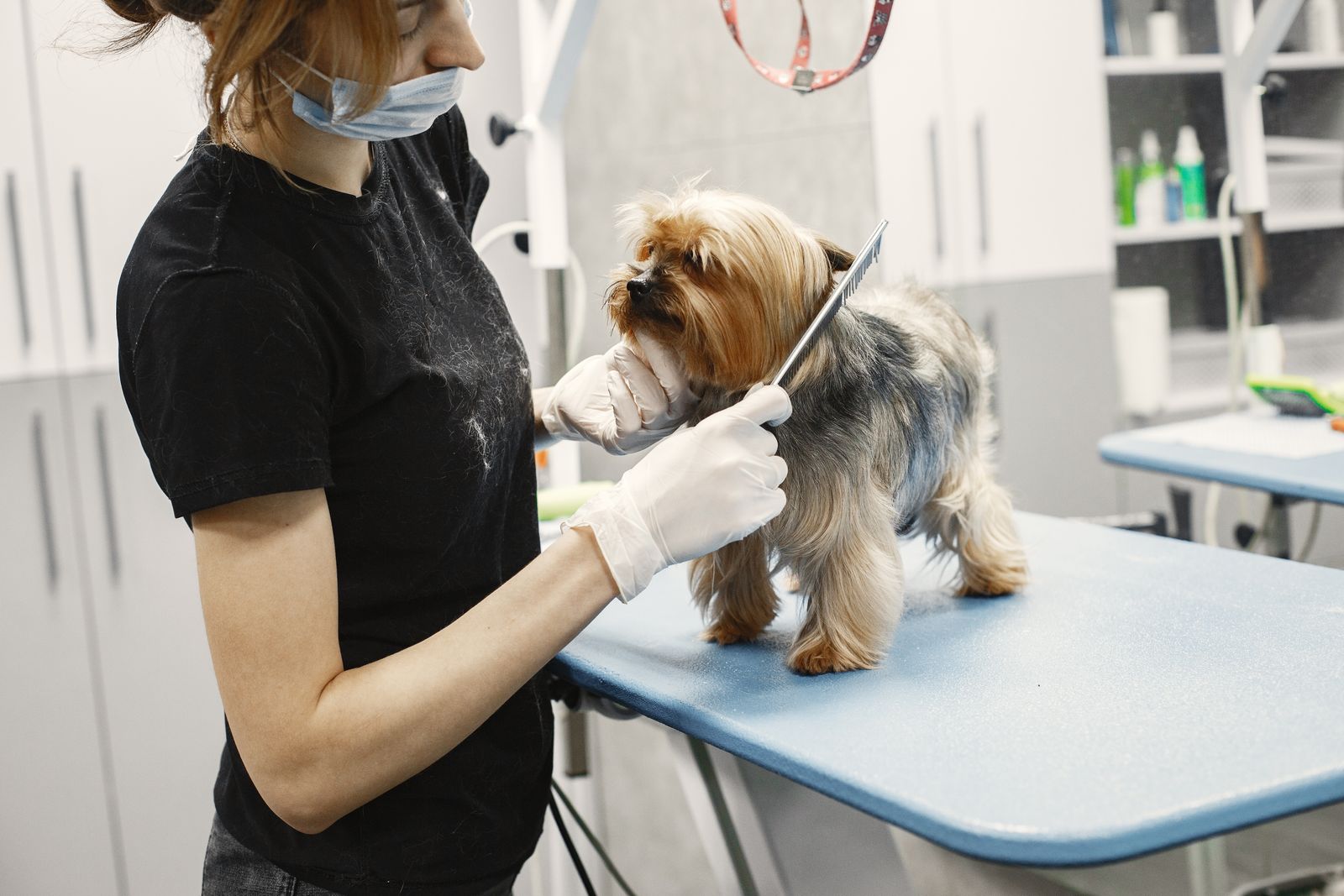
| Silky and long (Yorkies, shih tzus, spaniels) | Every 4 to 8 weeks | Brush every day or two; tangles form behind ears, in armpits, and at the collar |
| Double (retrievers, shepherds, huskies) | Every 6 to 8 weeks, with heavier de-shedding in spring and fall | Weekly brushing, more during the two big seasonal sheds |
| Wire (terriers, schnauzers) | Every 6 to 8 weeks for clipping; hand-stripping runs on its own cycle | Weekly brushing and beard and leg combing to keep furnishings from felting |
| Short and smooth (labs in summer coat, beagles, boxers) | Every 8 to 12 weeks for bath and nails | Occasional brushing with a rubber curry; nails still need regular checks |
| All coats: nails | Every 3 to 4 weeks | Listen for clicking on hard floors, which means the nails are already long |
Why curly and silky coats run on a short clock
Curly and silky coats do not shed out and start over the way a short coat does. Hair keeps growing, loose hair stays trapped in the coat, and trapped hair plus friction makes mats. A four-to-six-week rhythm keeps the coat at a length an owner can actually brush to the skin. Stretch it to three months and the groom stops being a haircut and becomes a rescue, often a short one.
Double coats follow the seasons instead
A double coat runs on spring and fall. In Lincolnton, the heavy shed tends to arrive as Piedmont weather warms and again as it cools, and those are the visits to schedule ahead, because every retriever and shepherd owner in town has the same idea the same week. Between sheds, a double-coated dog looks low maintenance, but the undercoat is quietly packing down, and a bath and blow-out every six to eight weeks keeps it loose and the skin breathing.
Summer heat and humidity add one more item: check the skin under the dense coat after swims, baths, and very humid weeks. A coat that stays damp underneath can develop hot spots quickly in July and August.
The parts on their own schedules
Nails do not care what coat is above them. Most dogs need a trim every three to four weeks, and dogs who walk mainly on grass need it more reliably than dogs walked on pavement. Ears on floppy and fluffy breeds need regular checks and cleaning as part of the groom cycle. Teeth, sanitary trims, and paw pads each have their own pace, which is why a full groom bundles them: one visit resets every clock at once.
Building your dog's year
Start with the coat row above, book the next appointment before you leave the current one, and then adjust by evidence. If you are finding mats at week three, the interval is too long or the home brushing is not reaching the skin. If the dog comes in barely needing work twice in a row, you can stretch a week. Puppies, seniors, and dogs who swim or hike the local trails will each bend the calendar a little.
The simplest test is the comb test. If a metal comb glides from skin to tip over the whole dog the day before an appointment, your rhythm is right. If the comb is already stopping in the armpits and behind the ears at week two, something in the rhythm needs to change, and it is cheaper in comfort to change it early.
Common questions
Can I just book when my dog looks shaggy?
You can, but by the time a curly or silky coat looks shaggy it is often already matted underneath. Booking on the coat's interval, not its appearance, keeps grooms shorter and more comfortable.
Do short-haired dogs really need a groomer?
They need less cutting, but baths, nail care, ear checks, and de-shedding still apply. Many short-coated dogs visit every two to three months mainly for those services.
What changes for a puppy or a senior dog?
Puppies start with short intro visits before full grooms. Seniors often do better with the same coat interval but shorter, gentler appointments with more breaks.
Photos in this guide are representative stock images.
← All guides from Downtown Doggies← Back to Downtown Doggies